
EGS: Helsinki’s Festival Flagging – The City Celebrates Its Memories
Helsinki Festival is a celebration for all citizens. We all carry a memory related to the city that is worth celebrating.
Helsinki Festival, Helsingin Sanomat, and the artist EGS invite residents to share memories that deserve to be highlighted—and ultimately hoisted up a flagpole. Contemporary artist EGS, the creative force behind the festival’s new visual identity, will interpret selected memories into flags.
These flags will fly in front of Helsinki City Hall and on the roof of Sanomatalo throughout the festival.
Pigeon Legion

“In the early 1980s, Helsinki was teeming with pigeons. Pigeons were considered disease vectors and were treated with caution. However, pigeons were an integral part of Helsinki’s character, just like the war-traumatized winos—though the latter were hunted down and cleared from the streets for the Helsinki CSCE summit.
We were perhaps in the third grade when our teacher read us a news item reporting that the City of Helsinki was paying a bounty on pigeons. Five marks per head. The news sounded horrifying, but at the same time, it excited our imagination. Would the pigeon’s head be cut off with scissors or a knife, and would the heads then be taken to the City Hall to be counted?
We knew that there were at least a thousand pigeons at the Market Square. The five-mark coin promised for a single pigeon head equaled a whole week’s allowance. A quick calculation on graph paper showed that we could make a fortune with pigeon heads. We were intoxicated by the thought.
Of course, none of us kids from Southern Helsinki had ever killed a pigeon—or any other animal—but blinded by the lust for money and candy, we gathered our slingshots and set off toward the Market Square. At the square, there was no need to search for pigeons: they strolled around us like true locals.
Terror crept into us as we looked at the birds flocking trustingly around us. Kind, funny pigeons. We had grown up together in these hoods. We looked at each other in confusion. Finally, someone pulled out their slingshot and intentionally shot a small wire pellet wide. My friend, who was too kind to even own a slingshot, kicked gently in the pigeon’s direction. It fluttered a bit further away and looked at us, shaking its head.
‘They’re too fast,’ someone said. We put our slingshots in our pockets and felt immensely relieved.
Despite the city’s attempts, living in Helsinki raised us to realize that there is room for everyone here: pigeons and winos alike. So long live the Helsinki pigeons, you deserve to have the flags raised for you!”
On a frosty morning, the sea breathes

“On an early freezing morning in late February, the sea breathes.
After a long bike ride, I step onto the ferry and feel my fingers slowly warming up, as if blood were returning to them. My breathing evens out. The city is left behind, and ahead lies only a gray sea, steaming like an animal waking from hibernation.
The sun doesn’t warm us yet, but it promises to. The light breaks through the dark, and artificial lights go out one by one. On the surface of the ice, the light refracts into cracks that shimmer with the movement of the ferry. The sun isn’t visible over the city yet, but its low glow refracts against the ice floes, dyeing them a faint golden yellow. The first rays of the spring sun show that light overcomes the darkness.
The ferry moves forward, sometimes silently, sometimes breaking ice. The rumble reverberates right through your body. That’s when you realize how small you are and how vast this landscape is. The best part is the silence: no wind, no sounds, just ice and water. The best part is being on the move before everyone else—when the city hasn’t yet remembered to be busy. That’s when I get this moment to myself.
In winter, I hope for wind, even though it slows down cycling. It makes the sea feel alive. In the inner archipelago, you don’t need to fear its force; you can just experience it. On the ferry, I can experience the beauty and power of the sea, rather than just suffering from the constant wind and moisture.
I’ve traveled this route for years, but on mornings like these, it feels new. Not like a commute, but like a ritual—a morning transition from hustle to tranquility, from the hum of the city center to the silence of the sea. I surrender to the journey and let my thoughts quiet down. Fifteen minutes is enough: it carries you to the island while releasing you from the grip of everyday life. The sea does its job—it calms, it clarifies. Later, the tourists’ wonder and cameras serve as a reminder that this isn’t something to take for granted. They focus on taking photos; I focus on breathing.
This moment is Helsinki’s hidden gem—open to everyone, but experienced only by those who find its solitude. It’s a paradox: if everyone came here, the moment would disappear. That’s why it’s mine. Not a transition, but an experience. A morning when the sea breathes and Helsinki stands still. A moment that belongs only to me—and that’s precisely why it stays.”
31 January 1988
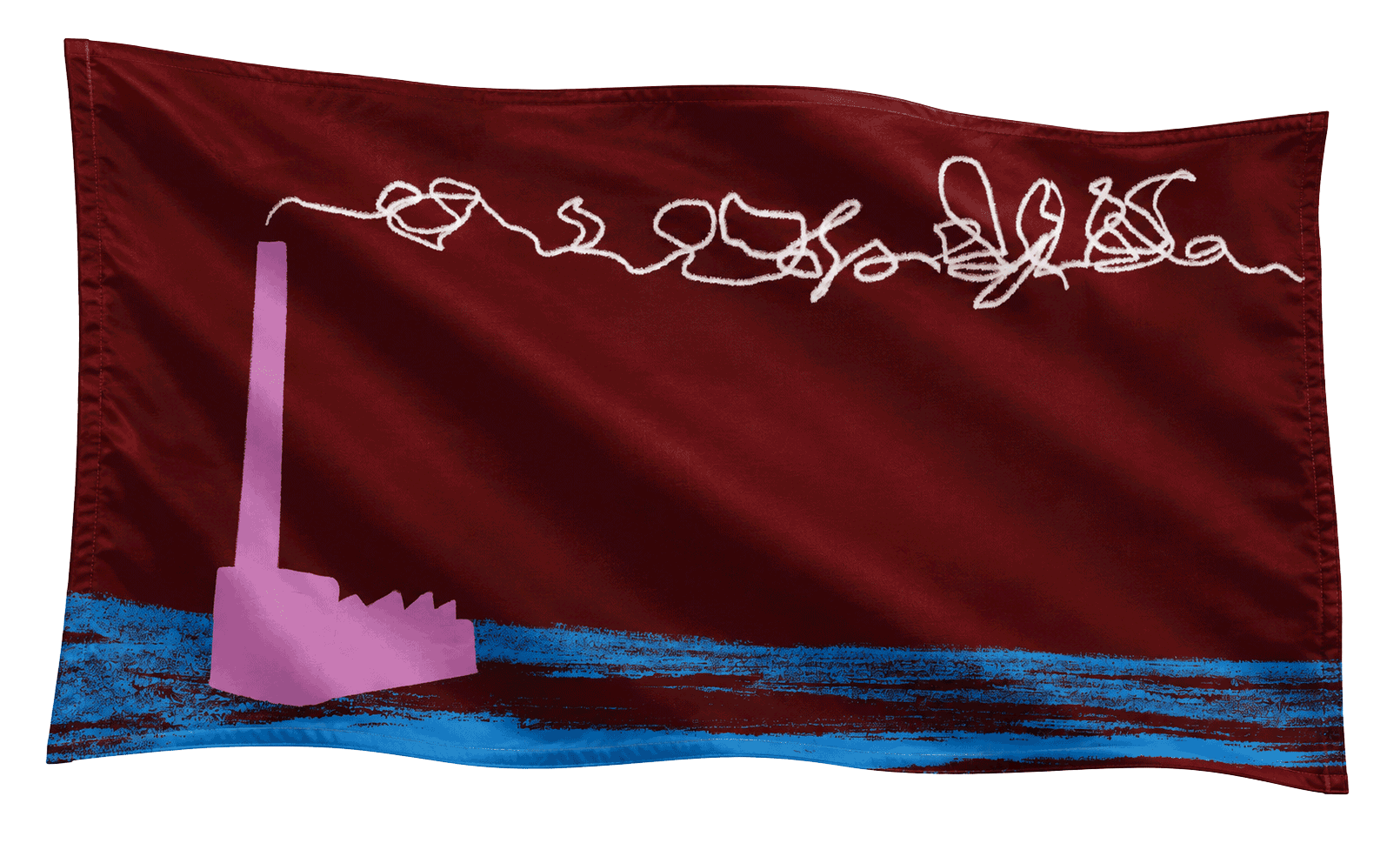
“The chimney of the Kyläsaari waste incineration plant was demolished on January 31, 1988. The exact time had been announced, and my whole family went out onto the balcony of our Orioninkatu apartment to watch the explosion. It was one of those rare moments when the whole family was together, side by side. And we certainly did see that chimney come down.”
Nice family ❤️

”I am iranilainen and my best memory was when i met my some guy in helsinki and we got married togather now we have 2 babies and always is so good memory for us. I love Finland and Helsinki because give me nice family” ❤️
Harakka Island, sea, light and people

“Harakka Island, the sea, light, and people. In my memories is Harakka’s unique artist community, and especially the artists leaving from there this year. I remember our many rewarding coffee chats, pleasant beach trips, and our collaboration in organizing art exhibitions and events.”
Playground aunties
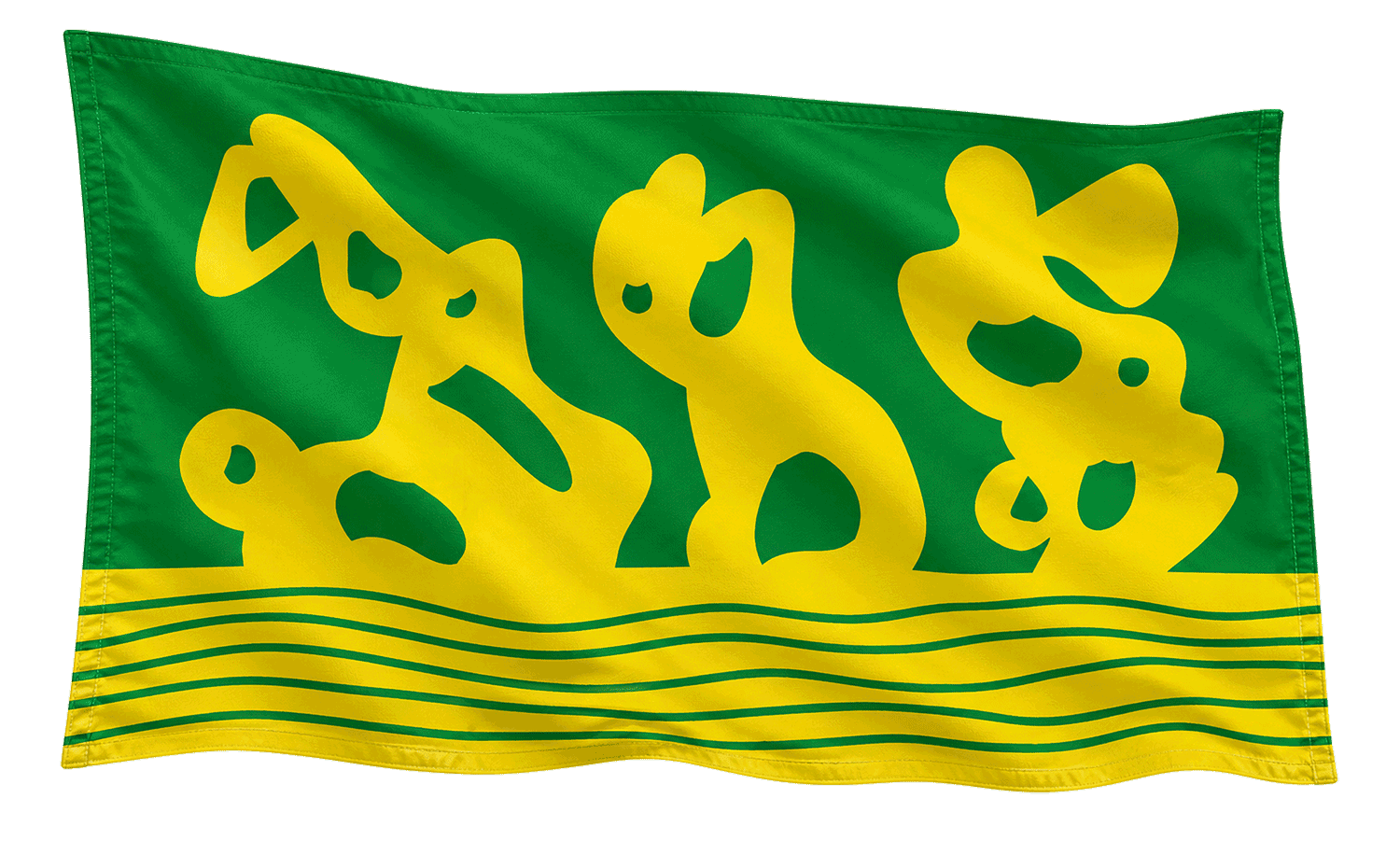
“I was born in November 1948, which makes me a baby boomer—part of the large post-war generation. For the first 13 years of my life, I lived on the fifth floor of an apartment building at Bulevardi 7.
‘Bullan,’ the Swedish-language girls’ school, was right across the street, and Ekberg’s bakery and café was in the neighboring building.
Along Bulevardi, under the shade of the linden trees, the number 4 tram rumbled toward Hietalahti.
Heading toward the city center, once you crossed Annankatu, you reached the Old Church Park, which some people nowadays call ‘Plague Park.’ The park is actually an old cemetery where the last burials took place in the early 1900s.
I spent a significant part of my childhood in the 1950s in that park.
Back then, many families with children lived in central Helsinki, and there were kids everywhere.
Playground aunties and playgrounds were important pillars in raising children.
First, from around the age of two until we were six, we spent our mornings in the care of the park aunties. A fenced corner next to the south side of the Old Church was reserved for them, featuring a lawn, a sandbox area, and a few benches.
My mother would drop me off there in the morning after breakfast and pick me up around noon for lunch.
The park aunties led and supervised various games, and we kids had a great time.
Mothers didn’t stay behind at the playground.
I especially remember one of the aunties who was apparently the head auntie. I remember how she was always gentle and cheerful. She had brown eyes and her hair was styled in a bun beneath a headscarf.
Boys will be boys… my friend Yrjö and I were grand adventurers (probably 3 or 4 years old at the time) and used to engage in ‘corresponding with the dead.’
In the upper right corner of the park stands Sederholm’s old burial chapel, and right next to it is a large granite tomb monument belonging to Major General and Senator H.C. Reuterskiöld. At the bottom edge of this stone slab, there was a small crevice where we would go to leave letters for the deceased.
Another major adventure happened around the same time. Yrjö and I escaped from the park aunties.
I had received a tricycle for Christmas that had a small tin flatbed over the rear wheels. The pedals were attached to the front wheel.
We snuck away unnoticed onto Bulevardi and pedaled toward Erottaja, continuing alongside Esplanadi all the way to the Market Square to look at the ships. We arrived at the edge of the Cholera Basin, and Ykä wanted a turn to ride the bike. I wouldn’t give it to him, so Yrjö got angry and yanked the tricycle right into the Cholera Basin. I burst into tears, and a crowd quickly gathered around us. There was a tugboat in the basin, and a deckhand managed to hook the bike with a boat hook and haul it to the surface—though missing one rear tire. That rear tire is probably still in the basin, as it couldn’t be found despite raking the bottom.
Well, the crowd around us naturally drew the attention of the Market Square police, who arrived on the scene. Someone had also alerted the police van, the ‘Black Maria,’ and we boys were put in the back seat. The officers questioned us, but neither of us could remember our last name or our home address.
The sensible police officers reasoned that we couldn’t have come from very far away. We sat in the back of the van while they drove along Esplanadi, and when we reached the Old Church, I shouted that we knew the way home from there. The officers didn’t let us off that easily; they kept driving, and at Bulevardi 7, I told them, ‘This is my home.’
Escorted by the police, we took the elevator up to the fifth floor. We informed the officers that they could leave now and that we could manage on our own from there. However, the police escorted us personally all the way inside and reported our adventure to our worried parents.
All’s well that ends well… we got a scolding and a strict ban on any new adventures.
The worried park aunties made us vow to remember that we were never to leave the park auntie area without permission, and we promised to obey.
Later, when we were in elementary school, the parks were essential after-school play areas.
At other times, we met friends in the park for various games.
In the autumn, we delighted in jumping into piles of maple leaves, and in the winter, we went cross-country skiing in the park. In the summer, many of the children spent their holidays in the ‘countryside,’ so the number of kids in the park dropped.
The construction of the suburbs significantly changed the number of children living in the city center during the 1960s. However, park aunties were still very much needed.
Our family moved to Espoo in 1963, and new friends and new surroundings became a reality.
Yet, whenever I walk through the city center, I try to route my path so that I can detour through ‘Plague Park,’ and every time I do, those friendly and kind Playground Aunties come back to mind.”